We may have been compensated through an experience or products from the links and companies mentioned in this post. Thank you for supporting my small business. Please see my disclaimer for more info.
The first time I stepped into one of Frank Lloyd Wright’s house tours, I didn’t quite get the hype. If you want the whole story of how I went from skeptic to fan, check out An Accidental Fan: How Frank Lloyd Wright Converted Me. But after visiting several of his creations, I can happily say I’ve been converted. The man was a genius (and a character). He was likely not someone I would have wanted to work with, but wow, did he know how to design a home!
Table of Contents
On my trip through the Laurel Highlands of Pennsylvania, I realized that Wright’s architectural wonders are every bit as much ‘art’ as the paintings and sculptures I came to see (you can read more about that in my post on Finding Art in Laurel Highlands, PA). This region is the perfect backdrop for exploring Frank Lloyd Wright houses in PA: Kentuck Knob, Fallingwater, and Polymath Park. If you’re new to Wright, here’s a brief overview: the man is a creative genius, his homes are stunning, and his story is never boring.
Kentuck Knob: A Usonian Frank Lloyd Wright House in PA
Kentuck Knob has so many details worth exploring that it really deserves to be talked about in two parts. Let’s start with the big picture before moving into the little things that caught my eye.
What Makes Kentuck Knob a Hexagonal Usonian Home
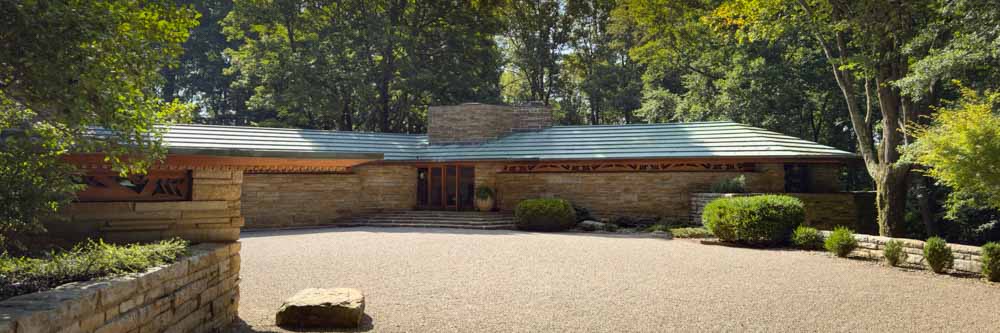
Kentuck Knob is a hexagonal Usonian home, a classic example of Wright’s effort to design houses that were affordable, functional, and still beautiful. On a side note, I found his Prairie Home style of architecture enchanting, so I didn’t expect to think much of this “new” Usonian style. I like to think that I have champagne tastes, after all.
When I heard that Wright created Usonian homes for the “everyman,” I was perplexed. Because they were built with modest materials and featured built-in furniture, I figured they would look like they were created on a beer budget. But what I didn’t expect was that the homes would still look so much like a Wright design that it’s hard to tell the difference for my untrained architectural eyes.
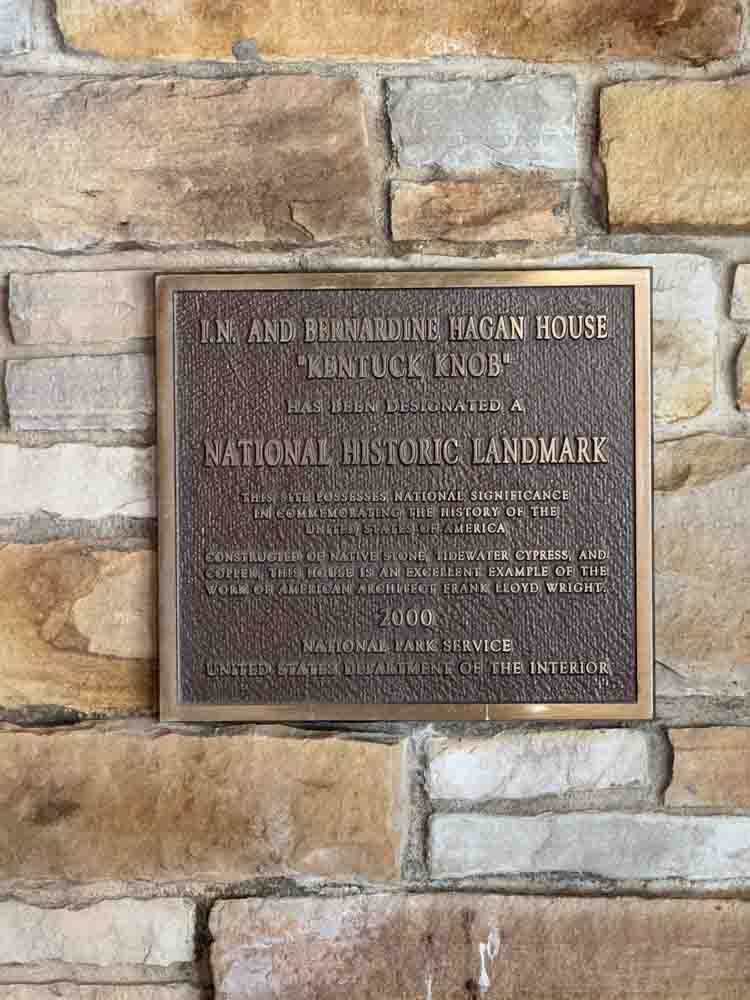
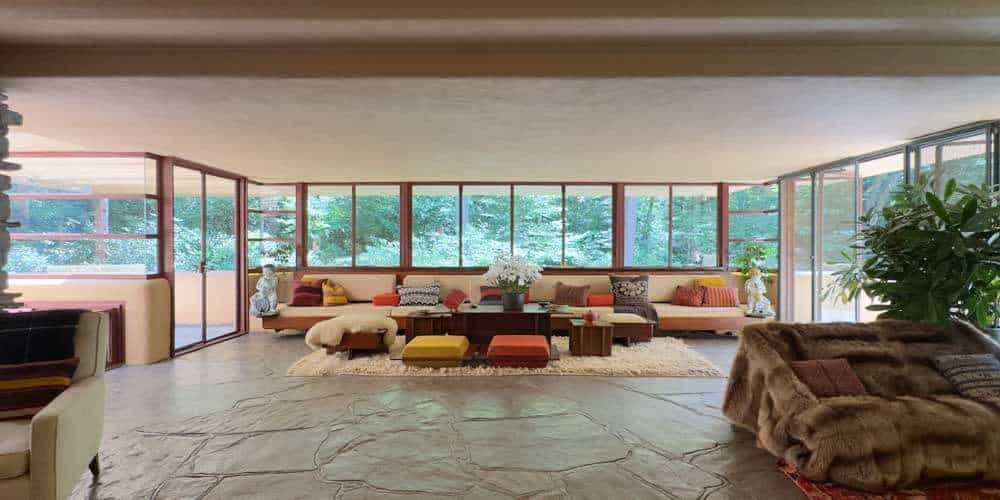
Usonian homes still include wide open spaces, bright windows that bring the outside in, and all the little details Wright was known for. They even showcase Wright’s concept of ‘compression and release,’ where you step through a narrow, dim entryway and suddenly find yourself in a light-filled living room with floor-to-ceiling windows and nature peeking in. The furnishings, like those at Kentuck Knob, are often made from materials that echo the home itself — in this case, warm red tidewater cypress ties everything together beautifully.
Quirky Details and Stories Inside Kentuck Knob
Kentuck Knob is no exception when it comes to Wright’s tiny, efficient kitchens, which he referred to as ‘workspaces’ (insert eyeroll here – said by a man from a different time). And he flat-out refused to design attics or basements for his clients, declaring that they are clutter traps (he’s not wrong, though). My favorite story from the tour was when a client asked about the budget. Wright’s response? ‘My dear, I would have no idea.’ That pretty much says it all about the man.
My favorite detail at Kentuck Knob is the row of octagonal windows stretching across the back of the house that shine mesmerizing light into the home. Our guide explained that at certain times of year, the sun hits just right and casts angled beams across the walls and floors. You can actually tell the time of day and even the season based on where those beams land. How cool is that? It’s almost like a built-in type of visual effects, changing with the seasons and the time of day.
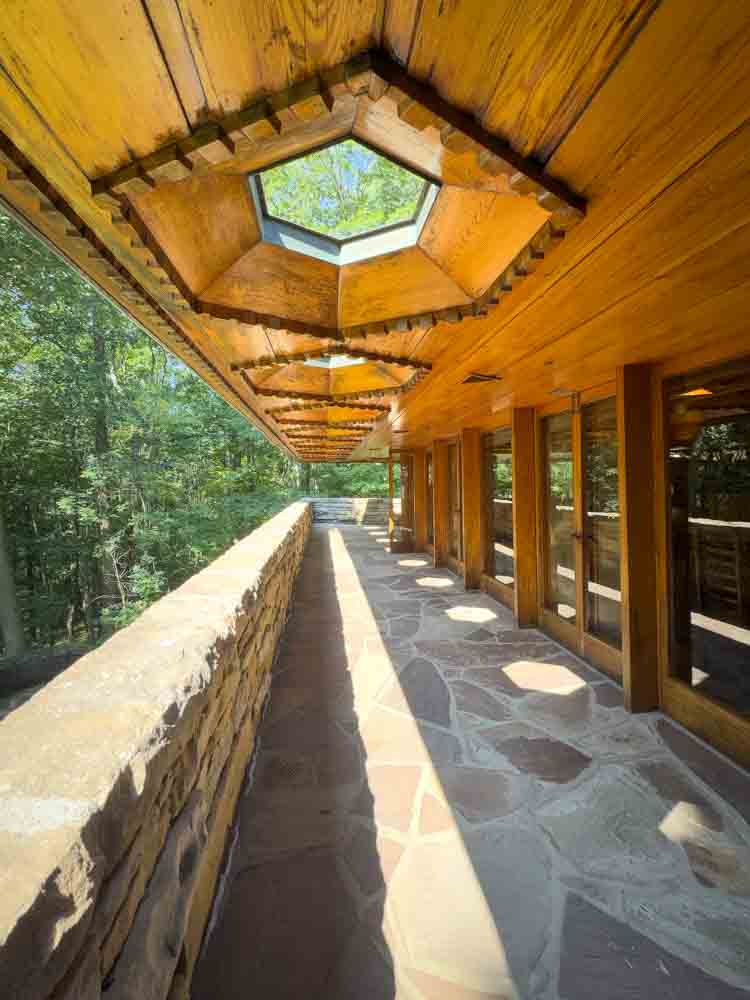
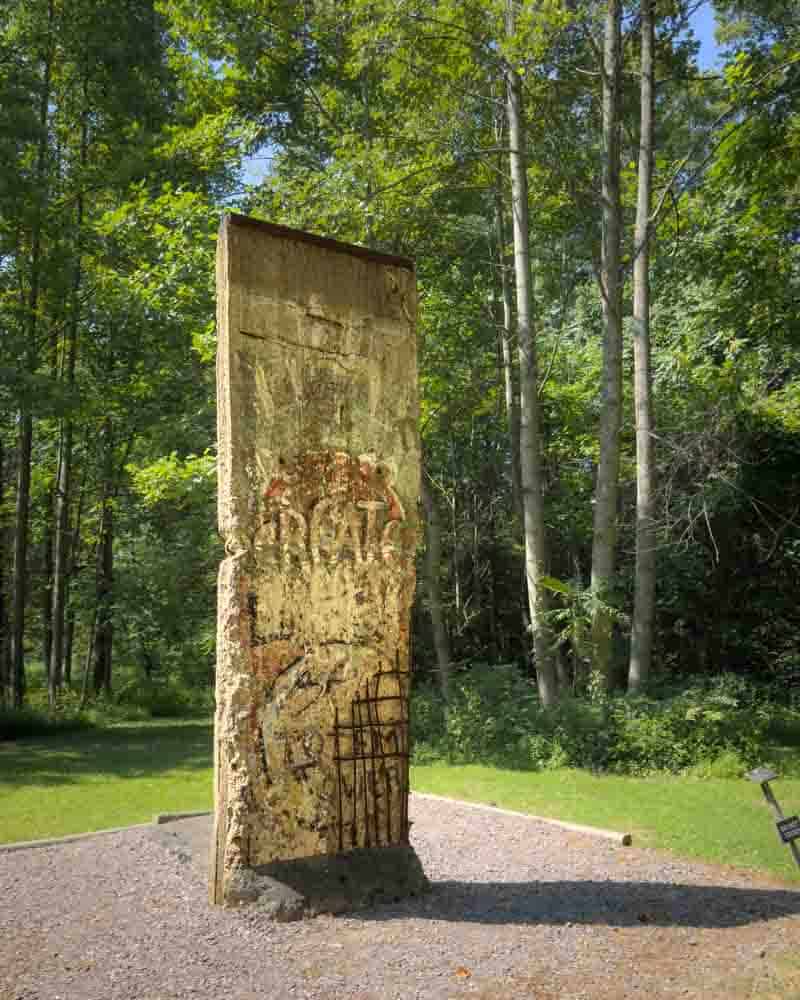
Kentuck Knob also has a beautiful art trail that winds around the property. This must-see sculpture garden features works collected by its owners. Keep an eye out for a section of the Berlin Wall tucked into the landscape. And don’t miss the stone bench overlooking the Alleghenies. I could have sat there all afternoon, soaking in the view.
Good news for accessibility: Kentuck Knob has no stairs, so it’s an easier tour for those who find steps challenging.
Fallingwater: Wright’s Masterpiece
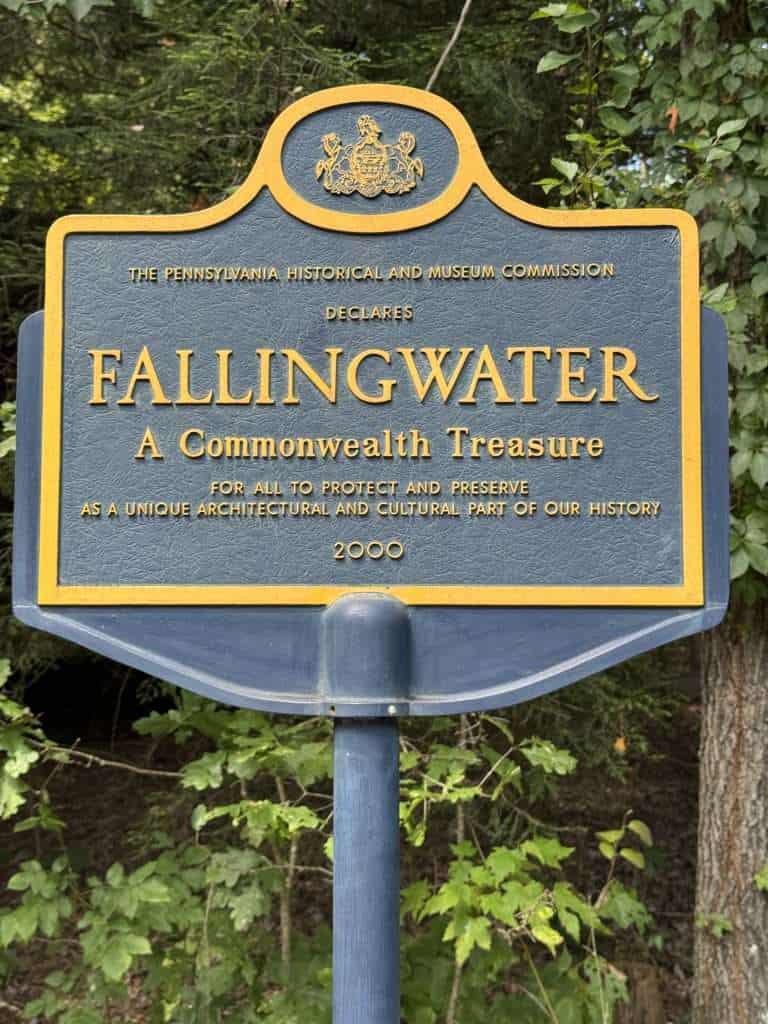
From Kentuck Knob, it’s a short drive to Fallingwater, the most famous of all Frank Lloyd Wright homes and a UNESCO World Heritage Site. The Western Pennsylvania Conservancy maintains this National Historic Landmark, once owned by the Kaufmann family of Kaufmann’s Department Store in downtown Pittsburgh.
Why Fallingwater Became a World Icon
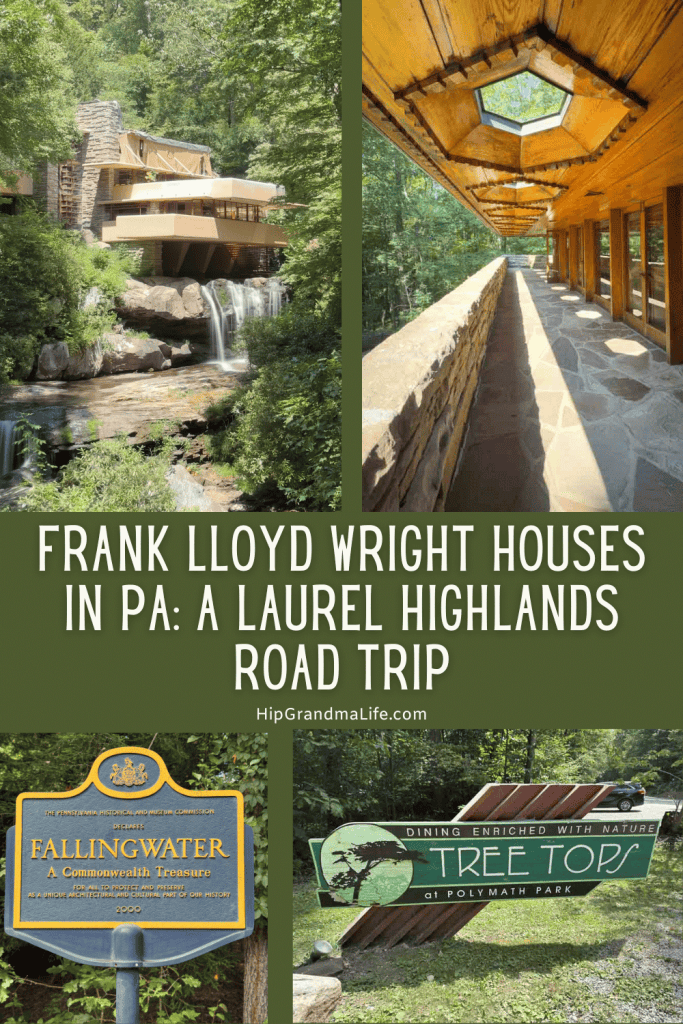
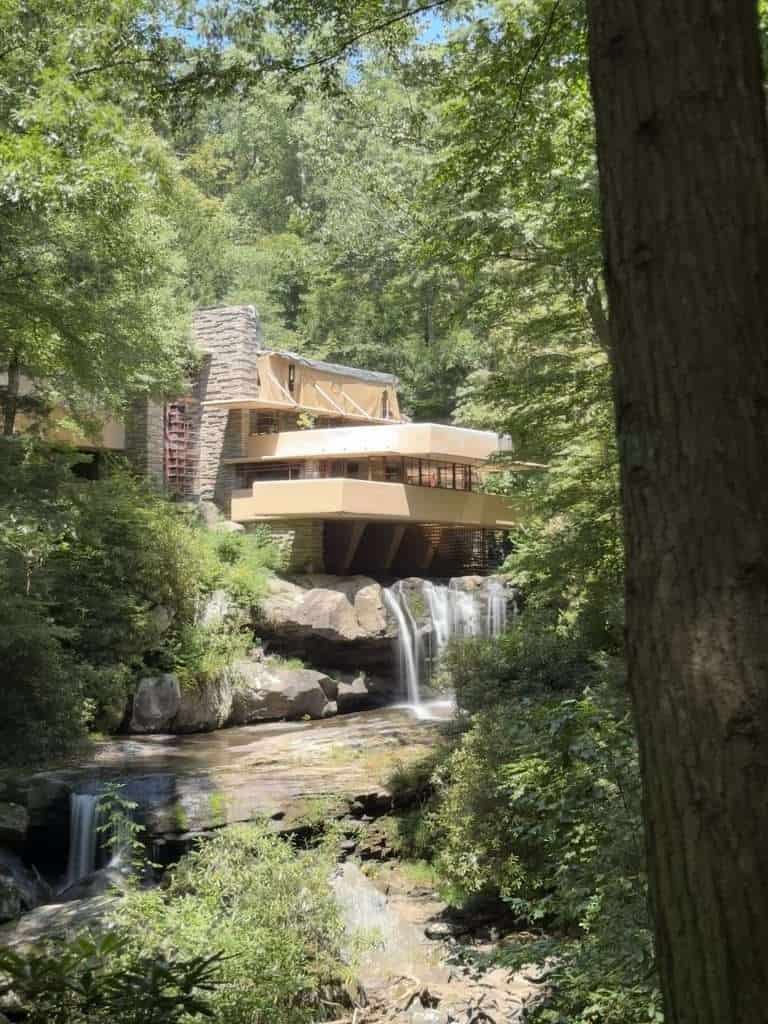
Fallingwater is often described as the ‘most recognizable house in the world.’ Built over a rushing waterfall at Bear Run, it embodies organic architecture, Wright’s philosophy of blending buildings seamlessly with their natural surroundings. The walls of native stone rise straight from the rock ledges, making the house feel as if it grew out of the hillside itself. In addition to the main house, the property also includes a guest house designed by Wright for the Kaufmann family, complete with a swimming pool that makes the whole estate feel like a retreat.
The completion of Fallingwater was a major comeback moment for Wright. Before that, his career had hit a slump. Between his dramatic (and tragic) personal life, the financial mess of the Great Depression, and younger architects rolling their eyes at his ‘dated’ style, folks were starting to count him out. But Wright never really went stale. He just got overshadowed by the shiny new International Style that was trendy at the time. Fallingwater was his way of saying, ‘Not so fast, kids,’ and proving he still had plenty of brilliance (and drama) left to share.
My First Time Visiting Fallingwater
With all the buzz around Fallingwater, you can imagine why my expectations were sky-high. And yes, it was impressive. Was it my favorite? Not quite. The steady stream of public tours made it hard to relax and soak in the space. The earpieces made it easy to hear the guide as they fit right over my hearing aids. But the crowds and the strict ‘no-touch’ reminders felt a little stiff.
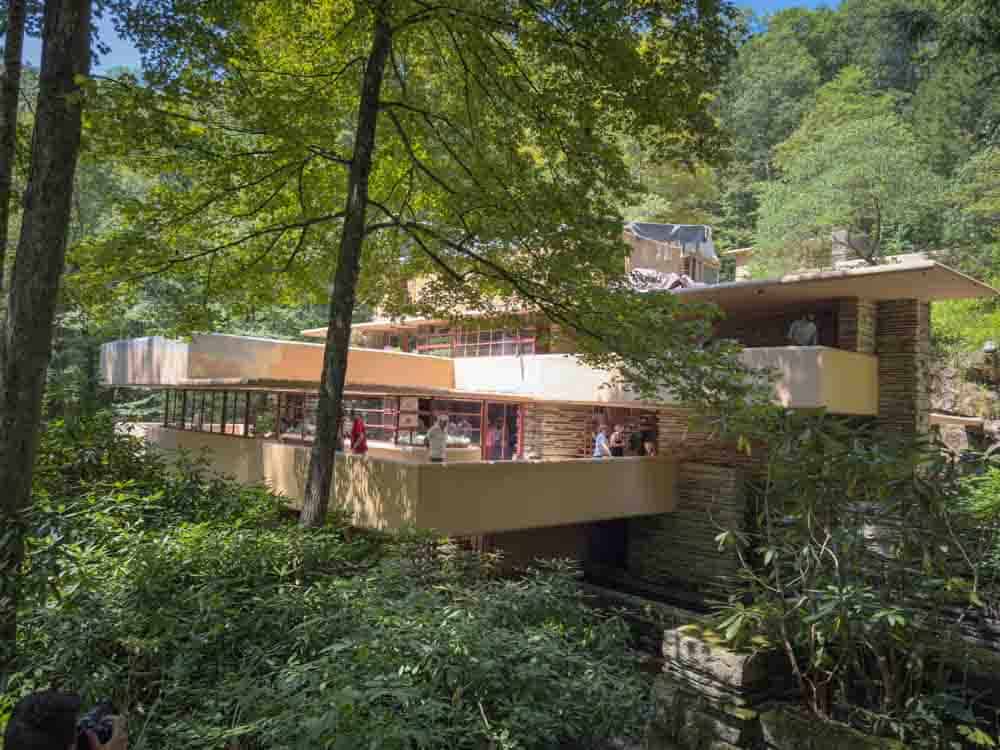
To top it off, the house was mid-renovation to fix some leaks, which pulled my focus away from the magic of the design. And if you’re chuckling about the leaks, you’re not alone. Wright’s homes had a reputation for leaky roofs. When someone asked him about it, he famously said, ‘If the roof doesn’t leak, the architect hasn’t been creative enough.’ Classic Wright: brilliant, stubborn, and just a little full of himself.
Still, standing on the terrace and looking straight down into the creek below is an experience I won’t forget. And the staff’s dedication to preservation is nothing short of heroic. After the tour, be sure to wander back through the visitor center, where you can grab a snack, browse the gift shop, and soak in more of Wright’s world before heading out.
When you go, note that Fallingwater requires many stairs. If accessibility is a concern, check with the property in advance to see what accommodations are available.
For more details on planning your visit to Fallingwater and the surrounding attractions, check out the Visit Laurel Highlands website.
Polymath Park: More Than One Wright
Just when I thought I had seen everything Wright has to offer, Polymath Park surprised me. This property in southwestern Pennsylvania is about a 30-minute drive from Fallingwater, and is definitely worth a side trip.
Touring the Usonian Homes at Polymath Park
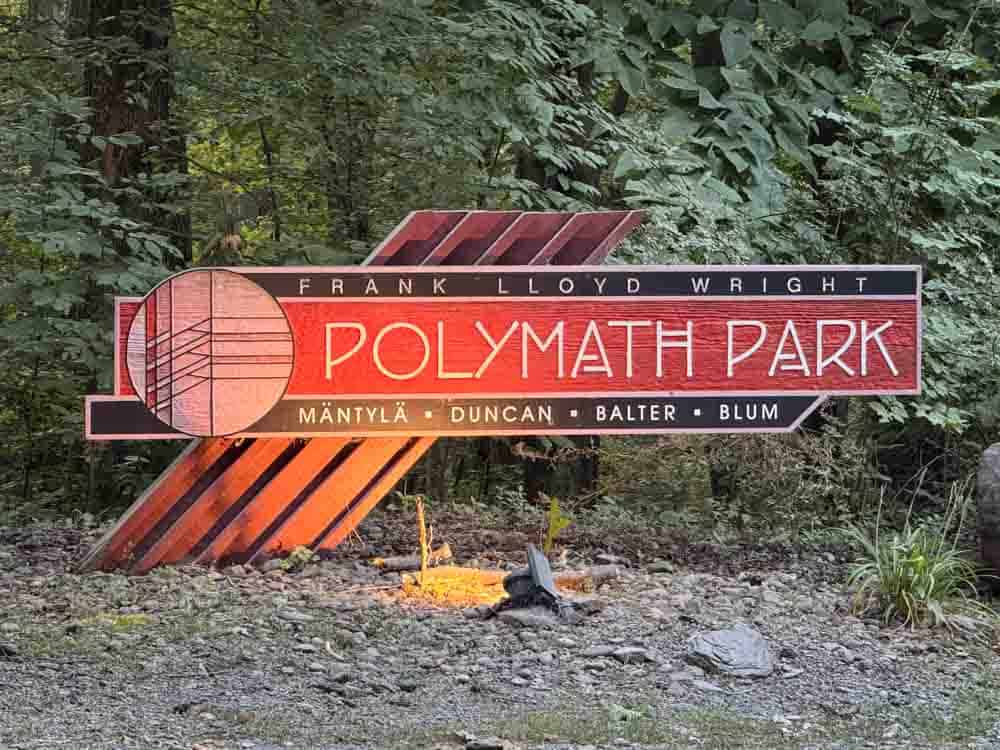
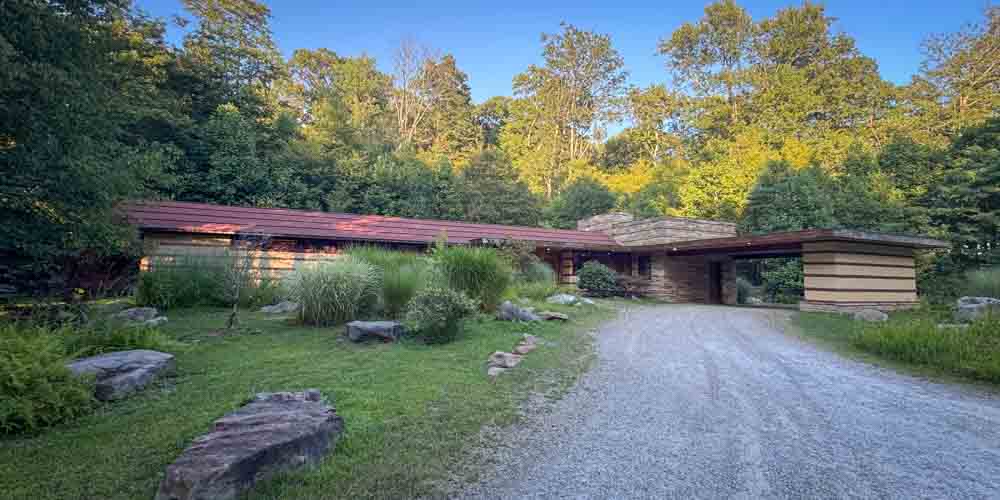
Polymath Park includes two homes designed by Wright’s apprentice Peter Berndtson, plus two Wright-designed houses that were relocated here: the Duncan House (a 1957 kit home) and Mäntylä (built initially for a Minnesota family). Plans are in place to reconstruct a fifth, the Rainwater House, which currently waits in storage.
Touring these Usonian homes gave me a deeper appreciation for Wright’s philosophy. Large overhangs, radiant floor heating, and clever use of natural light all make them feel cozy and timeless. And unlike Fallingwater, the homes I toured at Polymath Park had no steps, making them much more accessible.
Dining in the Forest at Treetops Restaurant
After our tours, we headed to the Treetops Restaurant, a fine dining restaurant suspended in the forest. The dining pods branch out from a wooden walkway, giving you a private perch in the trees. The food was fantastic, the service warm, and the only things missing were the bugs (thanks to the beautiful screens that envelope the pods).
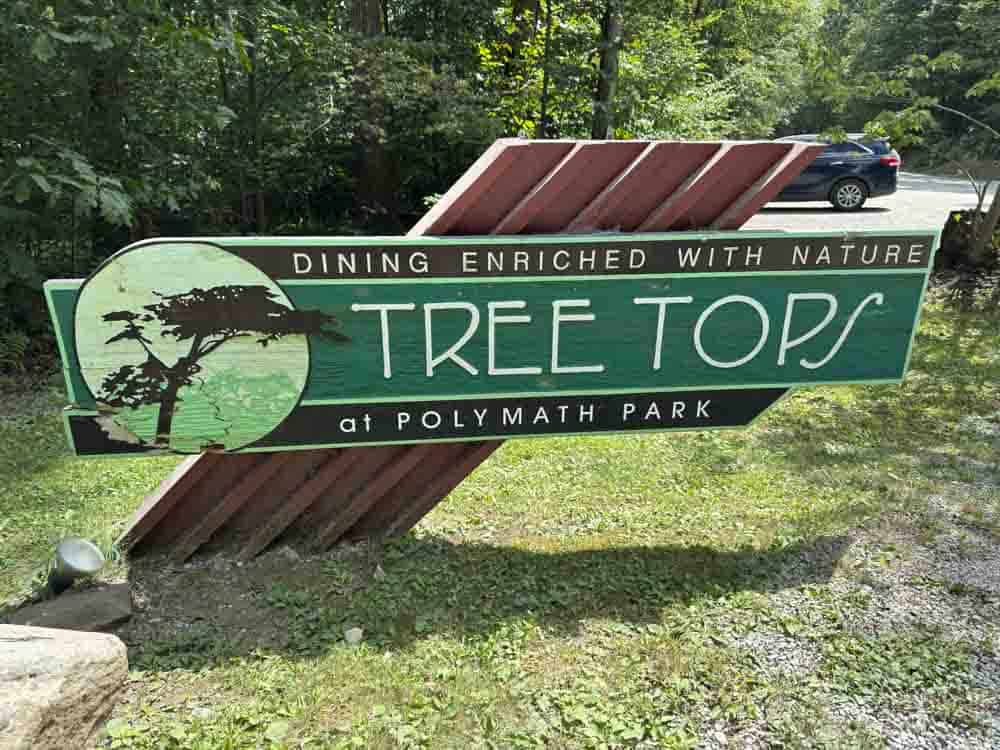
The was stellar. We had made our selections in advance, so we didn’t even need to study a menu. We arrived, and the staff directed us to our pod, then took care of the details. I had an outstanding mushroom ravioli for my main course, and ended with the perfect sweet bite for dessert. The experience is truly one of a kind and an ideal way to treat yourself. But if you can’t snag a reservation, you should still plan to pop into the bar for wood-fired pizza and a drink. It’s the perfect way to sample the atmosphere with a faster, no-fuss experience.

Spending the Night in a Wright-Designed Home
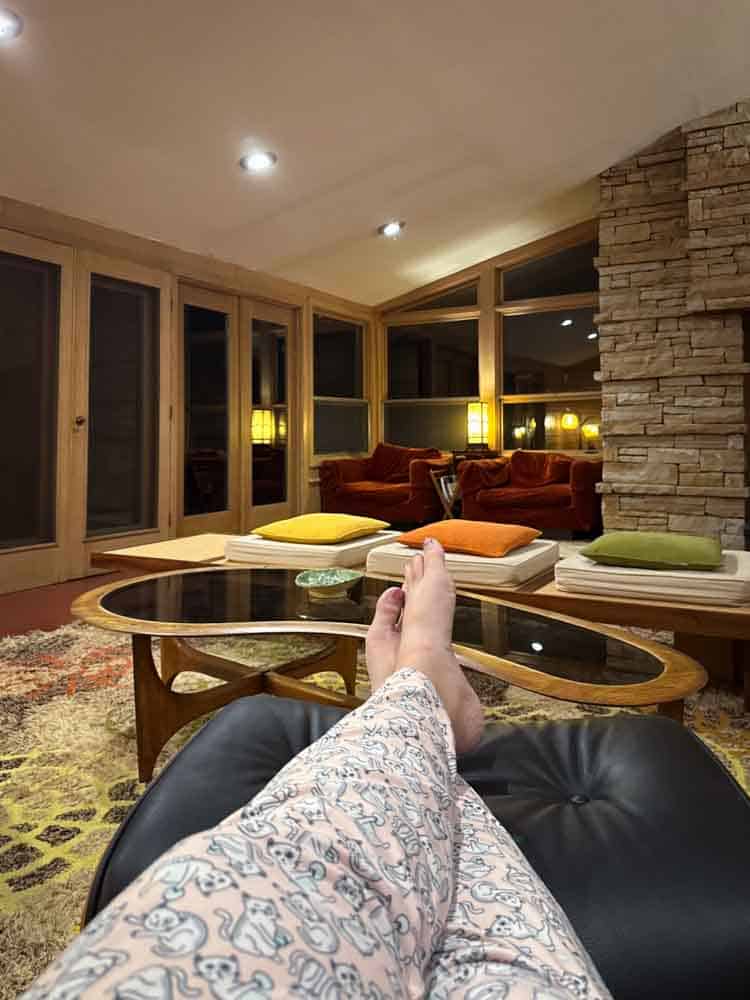
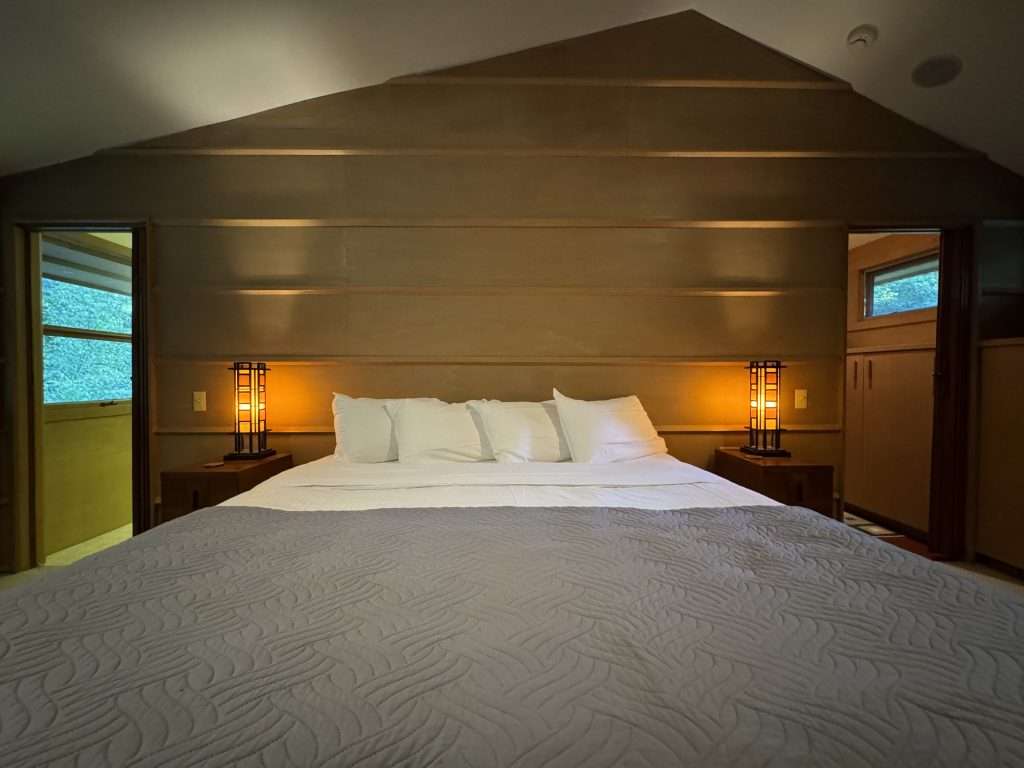
Here’s the icing on the cake: you can book overnight stays at Polymath Park. I stayed in the Duncan House, and it was magical! Wandering through the rooms after hours, opening cabinets, sitting in the living room with its sweeping windows, this is the kind of access you never get on a standard house tour. Whether you’re celebrating a milestone or just want a night in one of Wright’s creations, Polymath Park offers a once-in-a-lifetime opportunity.
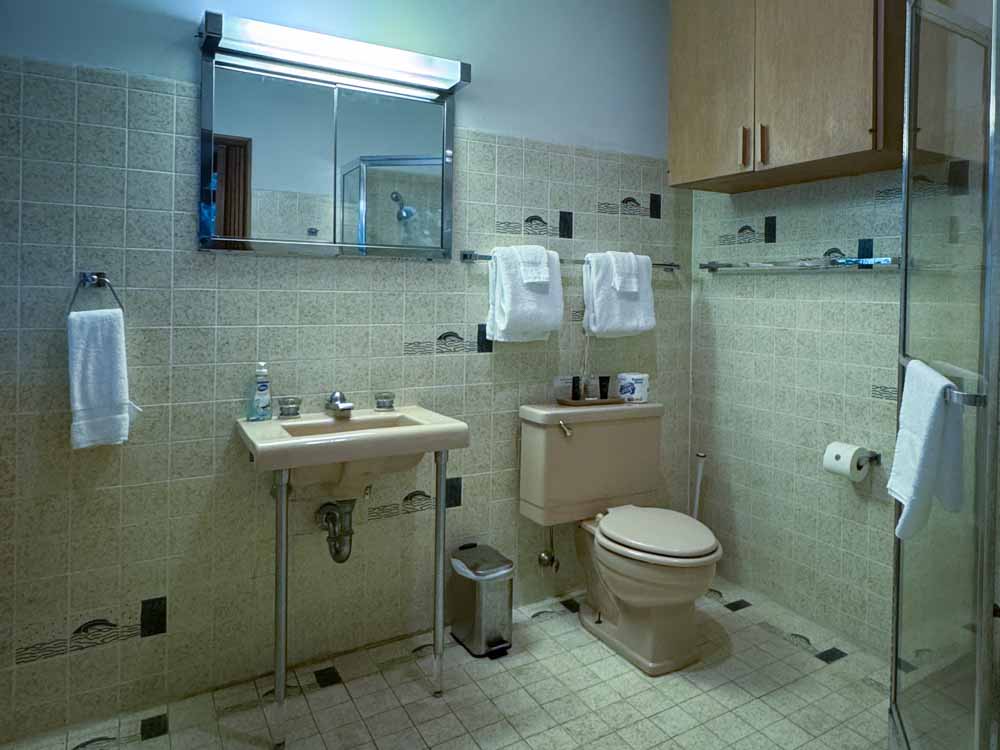
Note that the bathrooms in these properties are outfitted with the original fixtures, so you might just feel like you’re in your grandmother’s old bathroom with the powdered blue or soft pink ceramic and the original laminate countertops. All part of the charm!
Need a Place to Stay in Laurel Highlands, PA?
Closing the Door on Frank Lloyd Wright Houses in PA
I really loved spending a whole day exploring Frank Lloyd Wright’s houses in PA. I have a whole new appreciation for his genius and his quirks. These homes show why his designs are celebrated not just in Pennsylvania, but across the United States. From the Usonian hexagonal design of Kentuck Knob to the dramatic waterfalls of Fallingwater, now honored on the UNESCO World Heritage List, to the immersive experiences at Polymath Park, each stop revealed a different side of Wright’s creative mind.
And if you’re like me, an over-50 traveler who sometimes needs notes to remember all the details, bring along a journal. Download my free printable travel journal to help capture your memories along the way. And if you’re already in southwestern Pennsylvania, you might want to add on a side trip to nearby Johnstown. It’s packed with history and unique experiences, which I’ve rounded up in Best Things to Do in Johnstown, PA.
Wright and I would never have been best friends, but I’ll give credit where it’s due. His homes are brilliant, his vision unforgettable, and his legacy worth the trip.
Pin it to read later!