
We may have been compensated through an experience or products from the links and companies mentioned in this post. Thank you for supporting my small business. Please see my disclaimer for more info.
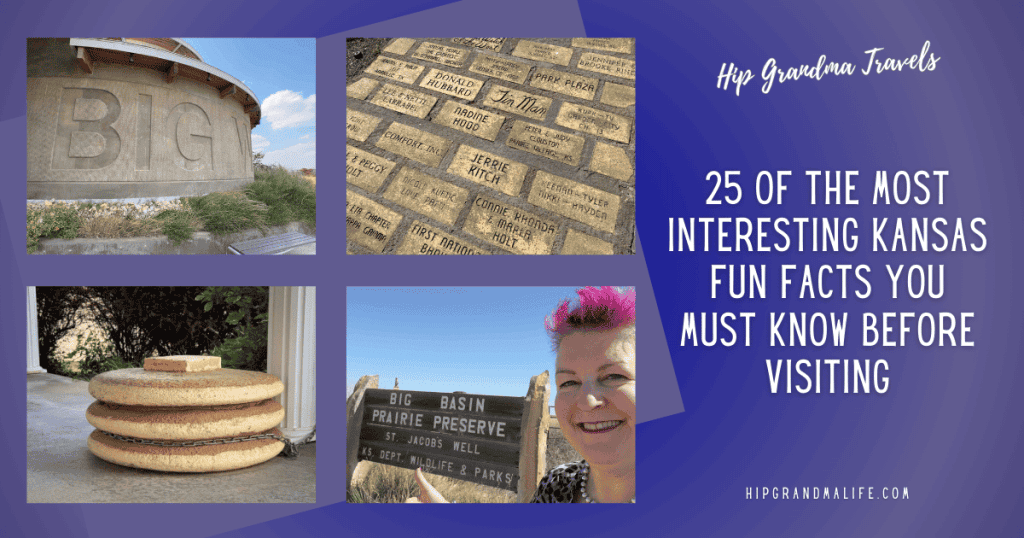
Kansas is a stunning state, full of fascinating history, natural beauty, and Kansas fun facts. For example, did you know that this quintessential prairie land is the 15th largest state in the U.S. by land area? On my recent trip to Kansas, I explored the Western Kansas region, also known as the Wild West, and discovered a whole bunch of interesting facts about the incredible state of Kansas.
I flew into the Dwight D. Eisenhower Airport in Wichita, but I plan to visit again on a cross-country road trip. No matter how you get there, these facts may just inspire and educate you before you visit the Sunflower State. I’m also writing a full Kansas Agritourism Guide (coming soon) to show you how these fun facts show up in real farm life, so stay tuned!
But before you go hunting for quirky Kansas things, you might like my free printable travel journal. It’s perfect for jotting down surprising fun facts (and your “Wait, that’s a thing?” moments). I’ve shared bits of my travel rituals in 10 Things You Probably Didn’t Know About Me — you’ll see how collecting oddball facts is partly how this blog began.
Table of Contents
Trees Are In Short Supply
One of the first things you’ll notice when you hit Kansas territory is the lack of trees. Don’t get me wrong. You’ll see them. They are there, but they’re not a natural occurrence on the prairie. Why? Because Kansas is an arid state. Almost all of the Great Plains receives less than 24 inches of rainfall yearly, most less than 16 inches.
Since we know trees need water, it makes perfect sense that you will usually see a home or settlement when you see a tree. Trees are planted to help reduce wind, provide shade, and protect homes, but they need water to thrive, which requires a bit of human help.
On an interesting side note, even though there are not many trees across the state, Kansas still has a state tree: the Cottonwood. When it receives plenty of water, it grows as much as 8 feet per year!
Who Needs Trees Anyway?
Look, and you’ll find evidence of Kansan ingenuity all across the state. On a tour through the Historic Adobe Museum, we learned about Sod Houses: how settlers used chunks of sod, stacked them together so their roots would intertwine, and created a thick block that worked well for the walls of early prairie homes. Sod homes, or soddies, were a staple on the Kansas frontier, and the thickness of the sod helped insulate them.
I also loved seeing the many stone fence posts as we traveled the highways across Southwest Kansas. With limited wood and trees, early farmers dug up chunks of limestone from a few inches below the topsoil and chipped them into post-size shapes. After sitting in the hot, dry conditions, limestone hardens, making it the perfect all-purpose fence post. Many of the posts you see are over 100 years old. Amazing!
Kansas is Flatter Than a Pancake
When they tell you Kansas is flat, believe them! You can see for miles, and the view is stunning! You may have heard that Kansas is flatter than a pancake, and you should believe it!
In 2003, Texas and Arizona scientists and authors of “Annals of Improbable Research,” proved that Kansas is indeed as flat as a pancake when they used a pancake purchased from IHOP and scientific data to compare the two. It was all very scientific and indeed proved the flatness of the state. Go figure! Bonus fun fact: Kansas has an average elevation of just 2,000 feet above sea level
The International Pancake Race
Speaking of pancakes, I had two fascinating pancake experiences while visiting, and both of them were so cool I recommend them to you, too!
Liberal, Kansas, is home to the International Pancake Day Hall of Fame. Here, we learned about the friendly competition between Olney, England, and Liberal, Kansas. Every year on Shrove Tuesday (aka Fat Tuesday) since 1950, women contestants line up in front of Liberal’s Public Library and run 415 yards to the finish line, all while wearing a dress, an apron, and a head scarf and carrying a skillet that holds a pancake.
The first woman to pass the finish line with at least a portion of her pancake remaining in the skillet wins! On the other side of the world, English women compete similarly. After both continents compete, they communicate via an international video call to determine who ran the race in the fastest time and which town claims the annual title.
The entire event ends with a parade and a community-wide all-you-can-eat pancake breakfast.
At the Hall of Fame, snap a selfie with a giant stack of pancakes, look at the names of past winners lining the walkway to the front door, and pore over many years of memorabilia from the race.


The Pancake House
While you’re in Liberal, stopping at the Pancake House is a must. The menu here has every kind of pancake you can imagine, including the amazingly delectable Apple Pancake. Our group all wanted to try it, so we ordered one to share at the table. Perfection! The variety of pancakes available was impressive. Sweet, savory, thick, thin, covered, or naked… have your pancake however you want!


Kansas Has Cows
Farmland covers over 88 percent of Kansas, and what’s more iconic on farmland than cows? Kansas cows are something special!
As a native Michigander, I’m used to seeing a few acres of fenced land with dairy cows grazing and barns nearby to keep them safe and ready for milking. But in Kansas, cattle are everywhere. They’re so vast, you sometimes can’t even see the fences.
Once, we even saw a little calf wandering down the highway, and I was shocked! Someone’s cow had escaped! But our host calmly explained that calves sometimes squeeze through the fence for a quick adventure before slipping back to their mothers. It’s not unusual in Kansas.
As you explore Kansas, watch for the cattle roaming the endless prairie. And don’t be surprised if you pass a processing plant where they’re fattening up for their final journey. Sometimes travel takes you to the macabre side of life.
I’ll share the full story (including how soft some of those calves really were) in my Animal Encounters in Kansas post. Link coming soon.
Kansas is known as The Sunflower State
As I write this in late summer, I think of the small sunflower plots dotting Michigan’s countryside, perfect for photographers to capture portraits. But no sunflower field I’ve enjoyed in Michigan compares to what I saw in Kansas during the Sunflower season. (Just in case you’re in Michigan and you really do want to find some sunflower fields, check out The 30 Best Sunflower Fields Across the State of Michigan).
As we cruised down Kansas’s long, straight highways, a sea of yellow blooms stretched as far as the eye could see. Kansas is known as the Sunflower State, and now I understand why—these stunning flowers are everywhere! There’s a reason the sunflower is the state flower, and just when I thought I’d seen it all in the vast, cultivated fields, we stumbled upon wild sunflowers.
So, how do you tell farmed sunflowers from wild ones? The easiest way is by their size. Wild sunflowers grow in all sizes, from tiny, low-to-the-ground blooms to larger, full ones. They line the highways and roads that cut through the natural prairie, where they’re abundant. When we visited the Big Basin Preserve, they were everywhere, and we made sure to get a good, close, and personal look at them!
All of this made me wonder why sunflowers love Kansas so much. Or is it the other way around? Check out this great article from the Kansas Farm Food Connection, which explains it better than I can.
Simply put, Kansas is the ideal climate for sunflowers. These beauties thrive in wide-open spaces with plenty of sunshine and little rainfall, soaking up the summer sun and bursting into bloom by August and September. The sunflower is a natural fit for Kansas, and once Kansans embraced it, it became a beloved state symbol.


Kansas Has Tornados
Kansas is well-known for its frequent tornadoes. It ranks second in the nation in the average number of tornadoes per year, trailing only Texas. From 2003 to 2022, Kansas averaged 87 tornadoes per year. One tornado stands out in history: the 2007 EF5 tornado that devastated Greensburg, Kansas. This colossal tornado, nearly 1.7 miles wide, tore through the town with winds exceeding 200 mph, leveling 95% of the buildings and leaving a trail of destruction that claimed 11 lives.
The Big Well Museum, located in the heart of Greensburg, has since become a focal point for remembering the tragedy. Originally built around the world’s largest hand-dug well, which remarkably survived the tornado, the museum now serves as a poignant reminder of the tornado’s destruction and the town’s incredible recovery. The museum honors the past through its exhibits while highlighting Greensburg’s journey of rebuilding and renewal.


…And Wind
In a state where the average wind speed exceeds 14 mph, and Dodge City is the windiest city, the tornado’s impact in Greensburg is a stark reminder of the powerful forces that Kansans regularly contend with.
Dorothy Lived in Kansas
Since we’re talking about tornadoes, we must mention The Wizard of Oz. I found it charming that two towns in Kansas love The Wizard of Oz so much that they have a slight rivalry over the story’s setting. I have only been to Liberal, and they do a pretty great job of commemorating Dorothy’s Kansas experience. I’ll hold off on voting for who did it better until I’ve visited Wamego.
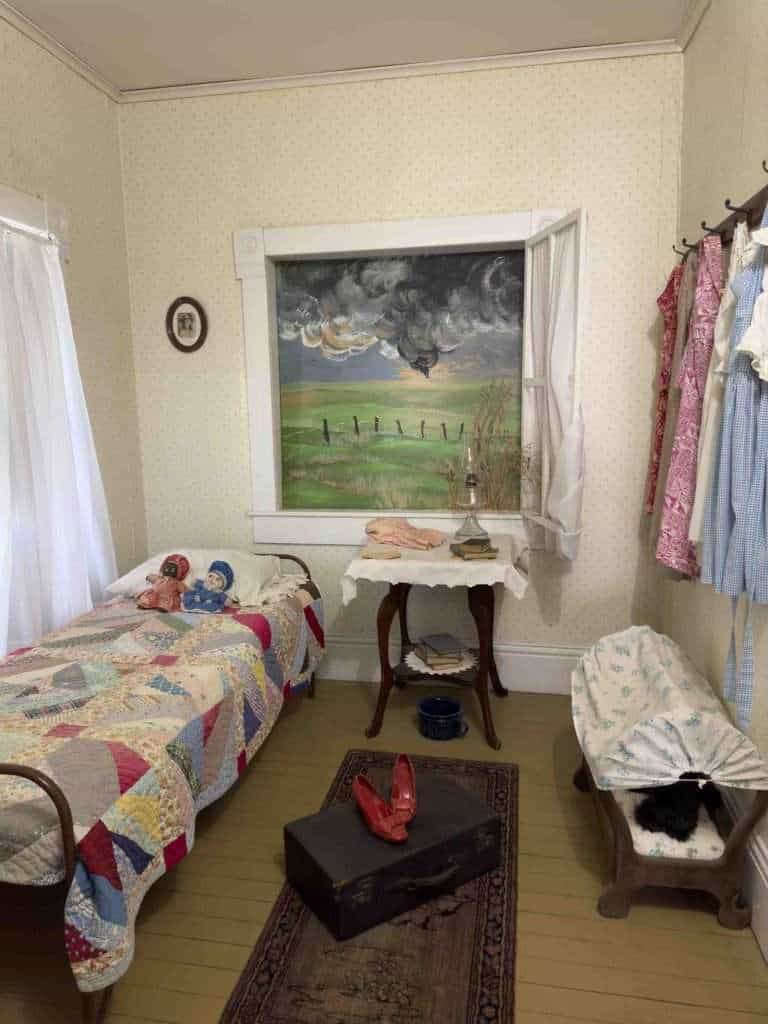
In Liberal, Kansas, you can see a house replicating Dorothy’s home from “The Wizard of Oz.” Dorothy’s House is a restored 1907 farmhouse depicting what Dorothy’s life with Uncle Henry and Auntie Em might have looked like. After a tour through the house with one of the beloved characters from the story, your guide will escort you to the Land of Oz.
Be prepared for a tour with projections, lights, and sound effects. At the end of the tour, enjoy an extensive collection of memorabilia and a model house that is said to be the actual house used in the tornado scene.
Although I haven’t been to Wamego, I learned it is home to the Oz Museum, which houses the world’s most extensive private collection of Wizard of Oz memorabilia, as well as a gift shop. Wamego also hosts an annual Wizard of Oz celebration in the fall, including live music, costume contests, and food.
Kansas also has at least three yellow brick roads, including the world’s longest one in Sedan.

Meteorites
If you are interested in space exploration or, rather, space objects falling to earth, you will love this quirky information. Southwest Kansas is renowned for its rich history of meteorite discoveries. The region’s wide-open plains and relatively low population density have made it an ideal place for meteorite hunters, leading to the discovery of some significant meteorites over the years.
One of the most famous meteorites found in the area is on display at the Big Well Museum in Greensburg. This meteorite weighs over 1,000 pounds and is surprisingly small for such a heavy object. Get an up-close view of the actual meteorite and read about the region’s history and its space-geology connection.


Prairies, Basins, and Bison
Kansas has bison, y’all! And trust me, I’ll be linking a full Prairie Life & Big Skies in Kansas article here soon, where I tell you how big that sky feels in person. The Big Basin Prairie Preserve is a stunning 1,818-acre (2.84 square miles) native mixed grass prairie. Do not confuse this land with one of Kansas’ State Parks. It is a National Grassland managed by the Kansas Department of Wildlife and Parks.

This area of Kansas is less than flat and features rolling hills, small canyons, level uplands, and notable geological formations like Big Basin—a significant, circular depression about one mile in diameter and 100 feet deep. We had the opportunity to hike down into the basin, but I preferred to photograph it from above. This whole preserve is full of gorgeous scenery and offers a chance to spot Kansas’s iconic bison.
Kansas is home to these majestic creatures; if you’re lucky, you might glimpse them on the plains. During our visit to the Big Basin Prairie Preserve, we had hoped to hike and explore the trails, but the soaring temperatures led us to take a scenic drive instead. As we navigated the preserve, we were delighted to see a herd of bison grazing peacefully—a truly breathtaking sight! We stopped the van and made a short hike to the highest point of the nearby bluff, where we could watch them for a while. Everyone should get to gaze out on a herd of bison at some point.

Kansas Has Some of the World’s Largest Things
I adore quirky things! Several Kansas cities are home to some of the quirkiest and most interesting “World’s Largest” attractions. In Greensburg, you’ll find the largest hand-dug well, which, as you now know, also houses info about the Largest Tornado ever recorded.
Cawker City proudly hosts the Largest Ball of Twine, a beloved roadside attraction that continues to grow with contributions from visitors. Yep – that’s right – you can contribute to this marvel, just like I did in Indiana, by adding a coat of paint to the World’s Largest Ball of Paint (read about it in Unveiling Indiana’s Biggest Attraction: The World’s Largest Ball of Paint).
In Garden City, the Largest Hairball found in a cow’s stomach is on display at the Finney County Historical Museum. The best part of this? You can touch the giant hairball, which feels less like hair and more like a big peach.

Lucas, Kansas, is home to the World’s Largest Collection of the World’s Smallest Versions of the World’s Largest Things, a delightful museum dedicated to miniaturized replicas of famous “largest” items. I haven’t yet been there, but believe me when I tell you, it’s on my list!

Like fun roadside stops? Check out the Quirky Roadside Facebook Group!
Southwest Kansas Has Great Museums
I was impressed by the many museums I toured in Kansas. Kansas knows how to record history! I love how the communities celebrate their history and encourage locals and tourists alike to enjoy it.
When traveling through Southwest Kansas, check out the Museum Passport Program. The passport lists museums along the trail. When you visit participating museums, collect stamps and earn rewards while delving into each museum’s unique stories.
The program includes several museums I mentioned in this article, including the Big Well Museum in Greensburg, where you can learn about the famous hand-dug well and meteorite; the Boot Hill Museum in Dodge City, which immerses you in the Wild West era; and the Finney County Historical Museum in Garden City, home to the Largest Hairball and extensive historical collections. I don’t know about you, but I love checking things off a list, and this passport is perfect!

Southwest Kansas – the Real Wild West
Southwest Kansas is the heart of the Wild West, brimming with tales of lawlessness, outlaws, and legendary gunfights. Dodge City, one of the most infamous frontier towns, was once a rough-and-tumble place where notorious figures like Jesse James and Billy the Kid roamed.
Although the famous gunfight at the OK Corral took place in Arizona, countless similar shootouts happened in Kansas’s Wild West towns. Legendary lawmen like Wyatt Earp and Doc Holliday also left their mark here, either passing through or enforcing order in this chaotic region during the late 1800s, when cattle drives, saloons, and railroads drew all sorts of characters.
Today, Kansas’s Wild West legacy lives on in places like Dodge City, where you can still experience the spirit of that rugged era. For a quirky stop, visit the Gunfighters Wax Museum on the second floor of the Kansas Teachers’ Hall of Fame, where you can enjoy fun depictions of these famous outlaws. True to its educational roots, the museum includes QR codes with each display—scan to learn more about the outlaws in front of you.


Need a Place to Stay?
I’ll also soon link my Unique Stays in Kansas roundup: the cozy barns, ranches, and quirky lodgings where I rested after all the exploring.
Conclusion – Wrapping It All Up
Other Notable Kansas Fun Facts
Kansas is a state rich in history, culture, and surprising contributions to the world. After one brief visit, I could write a book about all the cool Kansas fun facts I picked up there. I will hold myself back and leave you with what I’ve written. Well, I take that back. Here are a few final fun facts: Known for its native sunflowers, vast wheat fields, and central location in the U.S., Kansas is home to fascinating facts, from the origin of its name to its notable firsts in politics and business.
If you loved these facts, I can’t wait to show you how they come alive — through farms, prairies, and quirky stops. Check back soon for my Agritourism Guide and Unique Stays in Kansas links.
If you love collecting quirky stories (and planning your own adventures), grab my free printable travel journal. It’s a small gift to help you store these fun Kansas nuggets (and so many others) in your own travel keepsake.
A few Final Fun Facts:
- Kansans are also known as Jayhawks or Jayhawkers.
- The name “Kansas” comes from the Kansa Native Americans, who called it “People of the South Wind.”
- Susan Madora Salter, from Argonia, Kansas, was America’s first woman mayor (1887-1888).
- The Western Meadowlark is the Kansas State Bird.
- The Santa Fe Trail was a critical 19th-century route connecting Missouri to Santa Fe, passing through Kansas and playing a crucial role in U.S. westward expansion and Southwest development.
- The geographic center of the contiguous United States is near Lebanon, Kansas.
- Kansas is also called the Sunflower State, the Wheat State, and America’s Heartland.
- Kansas is the birthplace of the ICEE, helicopters, Pizza Hut, and Walt Disney’s Mickey Mouse, co-created by a Kansas native.
- Dwight D. Eisenhower National Airport in Wichita (Kansas’ largest city) honors the city as the “Air Capital of the World” due to its vital role in the aircraft industry. The nearby Amelia Earhart Hangar Museum in Atchison is also worth noting.
- The Louisiana Purchase of 1803 added land that would become the state of Kansas to the United States:
- Kansas joined the Union in 1861 as the 34th state of the United States.
- January 29 is Kansas Day, and school-aged kids often celebrate the day by snacking on a graham cracker smeared with frosting, minus a bite in the northwest corner to represent the Missouri River.
Loved these Kansas facts? You might also enjoy how quirky small towns surprise me — check out Unique Lodging Ideas: Unforgettable Stays for Women Over 50 (I’ll even be linking it when my Kansas lodging posts go live). .
Pin it for later!
